50x2030 at ICAS X: Advancing Agricultural Statistics for Sustainable Agrifood Systems
From 8 to 10 July, the 50x2030 Initiative participated in the 10th International Conference on Agricultural Statistics (ICAS X) in Kraków, Poland, joining the global agricultural statistics community to share country experiences, methodological innovations, and practical approaches to strengthening agricultural data systems.
As part of the Initiative's outreach and knowledge-sharing efforts, participation in ICAS X provided an opportunity to showcase best practices from partner countries, highlight innovative approaches to agricultural surveys and data use, disseminate actionable evidence, and demonstrate the support provided by 50x2030 partners to strengthen national agricultural data systems and promote the use of high-quality agricultural data. The conference also reinforced the Initiative's visibility and relevance within the broader Sustainable Agrifood Systems agenda.
During the event, the Initiative and its partners contributed through two organized technical sessions, three research presentations, a poster, and an exhibition booth.
The technical program demonstrated the breadth of the Initiative's work—from supporting countries in strengthening agricultural data systems to advancing survey methodologies and promoting the use of data for evidence-based policymaking.
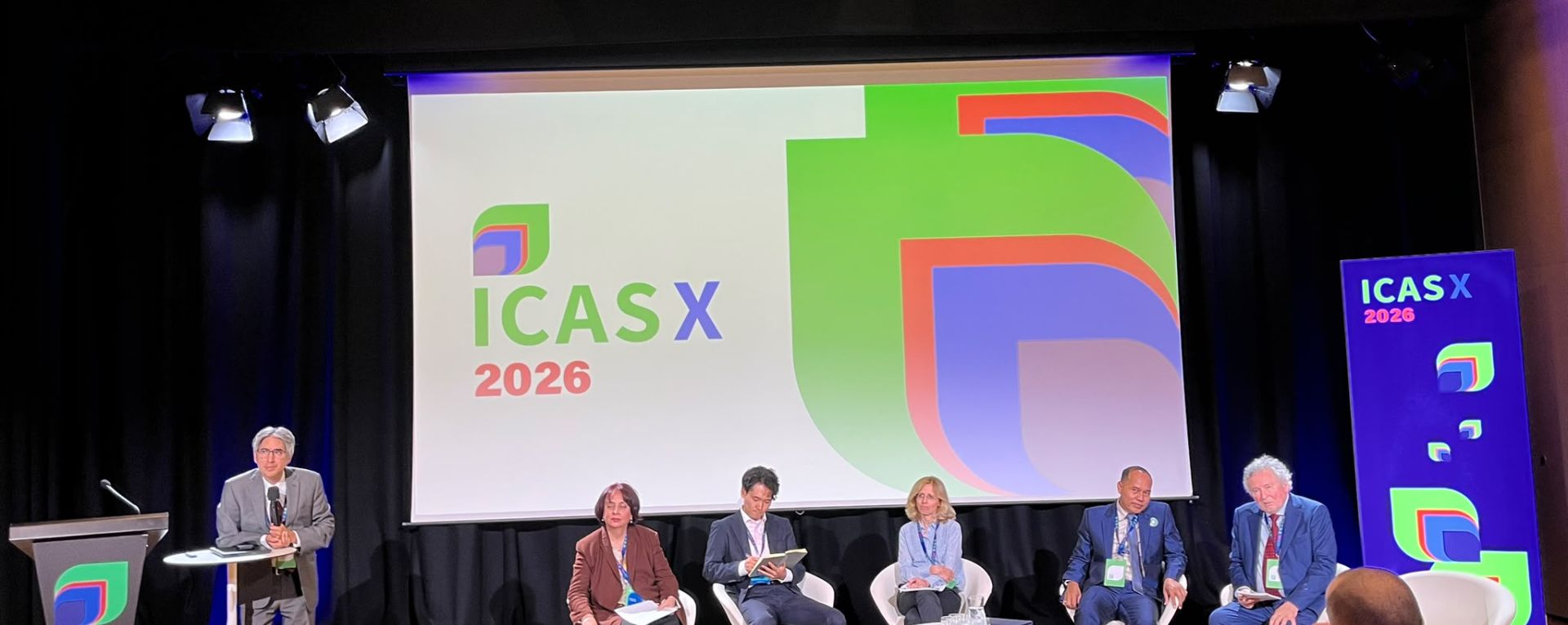
The dedicated session "50x2030 in Practice: Country Innovations in Agricultural Data Systems", jointly organized by the Global Partnership for Sustainable Development Data (GPSDD) and the Food and Agriculture Organization of the United Nations (FAO), showcased four country experiences that reflected how partner countries are applying the 50x2030 approach to address different national priorities.
.jpeg)
Panel discussion during the GPSDD–FAO session highlighting how partner countries are applying the 50x2030 approach to strengthen agricultural data systems and support evidence-based policymaking.
Cambodia presented the development of the Cambodia Agricultural Survey, a key step towards establishing a sustainable system for producing regular agricultural statistics. Georgia shared lessons learned from strengthening its agricultural data system, highlighting the importance of sustainable national statistical capacity. Sierra Leone presented its experience under the Initiative, including the Women's Empowerment in National Nutrition Security (WEMNS) Matrix, with a focus on improving the use of agricultural data in decision-making. Burkina Faso demonstrated how georeferenced agricultural data and predictive analytics can support more informed agricultural planning.
A second technical session featured presentations by researchers from the World Bank and the University of Arizona on methodological and technological advances, including mixed-mode survey experiments in Nigeria, tablet-based land area measurement, in situ weather sensors to improve climate data collection, and computer vision applications for livestock measurement. These innovations demonstrated how new technologies can improve measurement accuracy, increase efficiency, and strengthen the quality of official agricultural statistics.
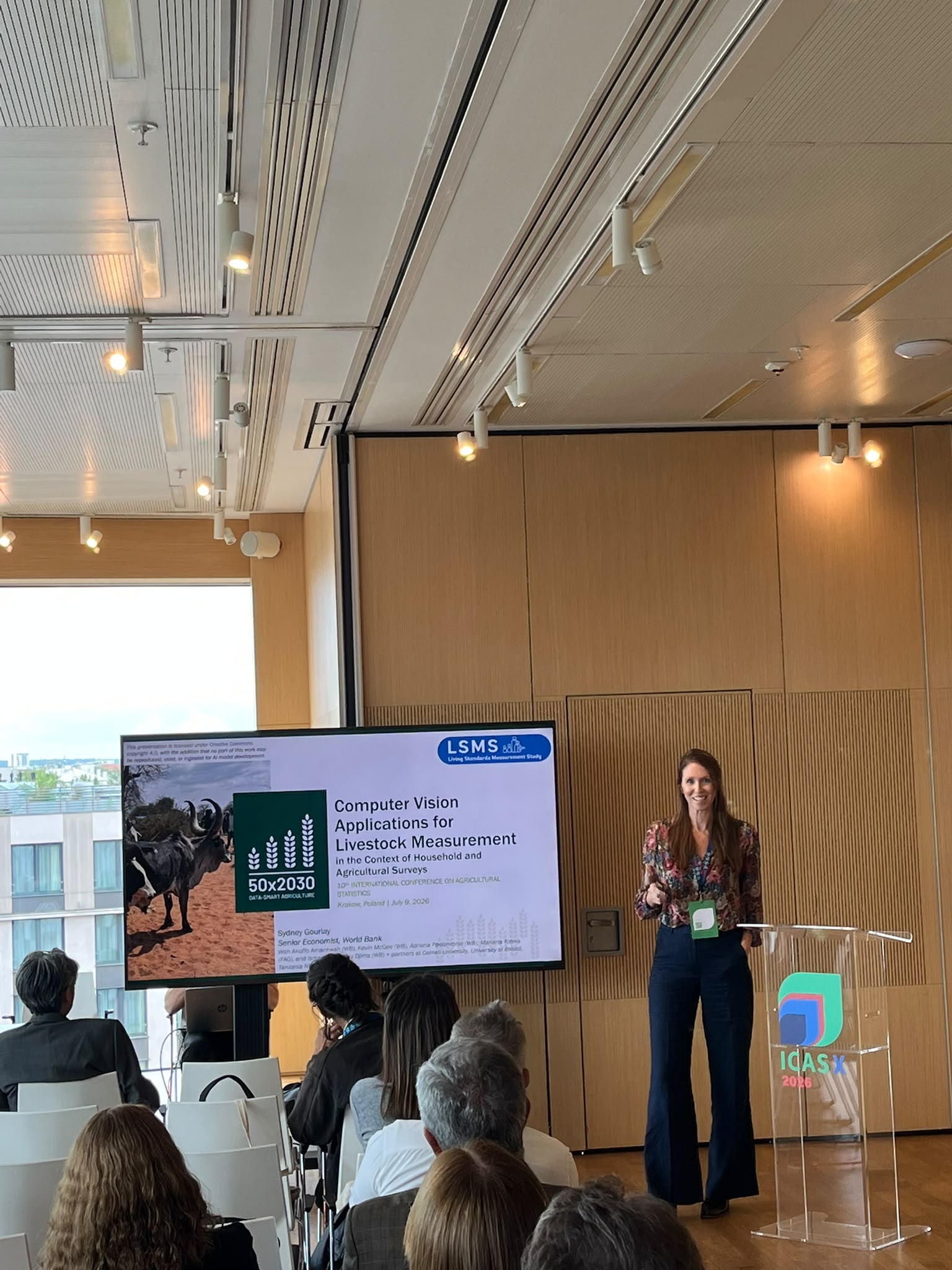
Sydney Gourlay (World Bank) presents research on computer vision applications for livestock measurement during the 50x2030 technical session at ICAS X.
Research presentations further showcased the value of 50x2030-supported data for generating policy-relevant evidence. Studies examined the impacts of public support measures on crop productivity in Burkina Faso, presented by FAO's Monitoring and Analysing Food and Agricultural Policies (MAFAP) program, and the effects of extreme weather events on agricultural productivity across five countries by combining household survey and geospatial data. The Evans School Policy Analysis and Research (EPAR) at the University of Washington also presented the Policy Explorer Platform (PEP), using Sierra Leone's Feed Salone strategy as a case study to demonstrate how data from the 2023 Annual Agricultural Survey can be transformed into practical analytical tools for policy analysis and decision support. A complementary poster presentation explored how artificial intelligence and expert knowledge can work together to strengthen data-driven policy analysis.
Throughout ICAS X, the 50x2030 information booth provided a space for participants to explore publications and communication materials, learn about country experiences, and engage with partners and technical experts. The booth also reinforced the Initiative's visibility and highlighted the value of collaboration in advancing sustainable agricultural statistics.
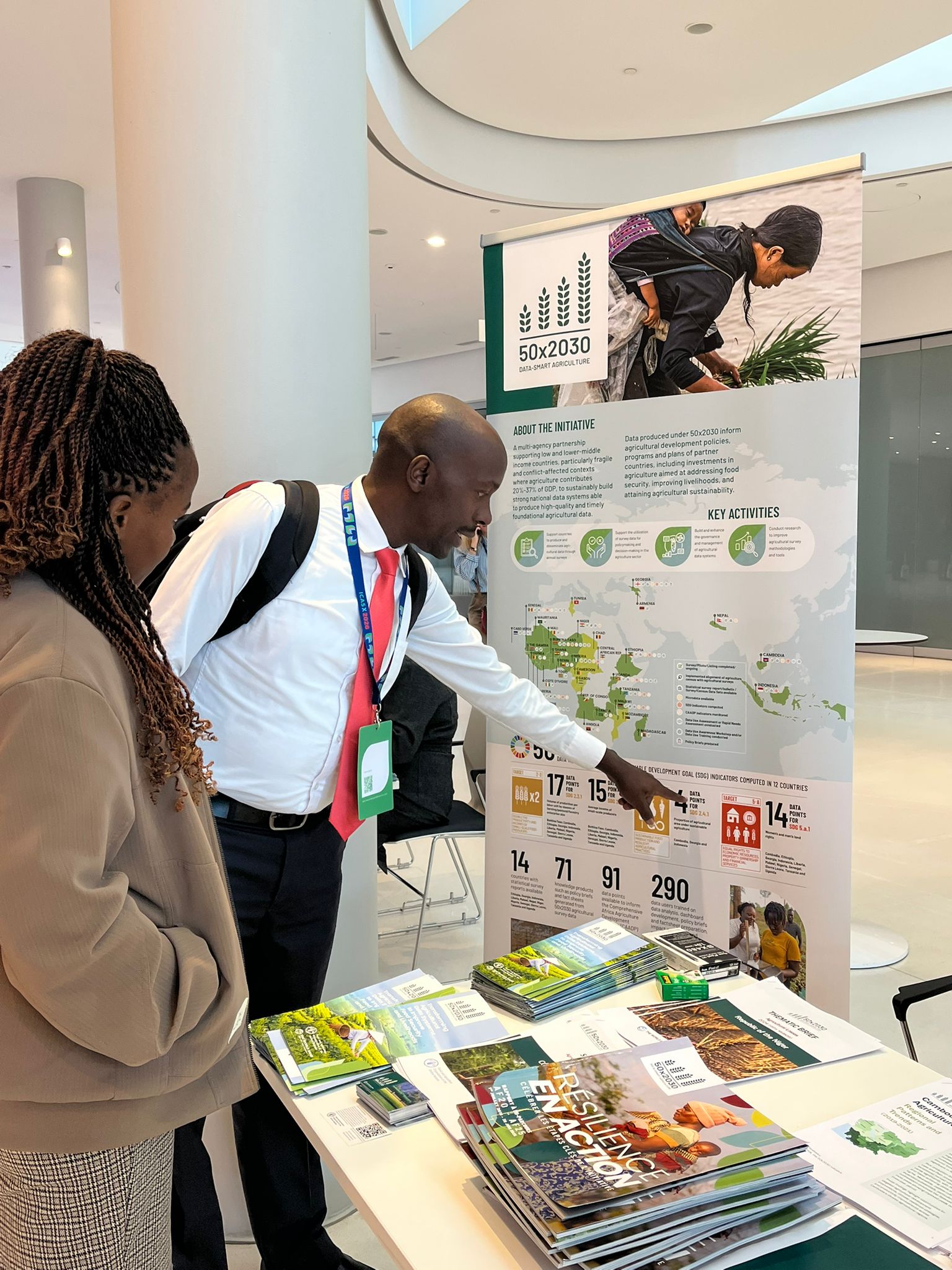
50x2030 exhibition booth
ICAS X provided a valuable platform to strengthen collaboration with partners, exchange lessons from country implementation, and advance the dialogue on the role of high-quality agricultural data in supporting evidence-based policies and sustainable agrifood systems.