Cambodia Graduates from 50x2030, Sustaining a National Agricultural Data System
After six years of strengthening its agricultural data system with 50x2030, Cambodia has graduated from the Initiative with a survey program that is now nationally owned and financed. In 2025, the Government of Cambodia fully financed the Cambodia Agricultural Survey (CAS) for the first time, while the National Institute of Statistics (NIS) and the Ministry of Agriculture, Forestry and Fisheries (MAFF) led the survey from fieldwork through to the publication of results.
In Cambodia, 54 percent of households are engaged in agriculture. Better agricultural data can therefore directly impact the lives of more than half the population. Over the course of the partnership, Cambodia transformed its agricultural data system from an infrequent, paper-based survey into an annual, fully digitized program producing more timely and useful data.
Cambodia’s 50x2030 journey
When Cambodia joined 50x2030 in 2019, it did not yet have a regular agricultural survey program providing timely and recurring data on the country’s agricultural sector. Establishing such a system was an important step toward giving policymakers, researchers, and other data users the information they needed to understand changes in agriculture and respond to emerging priorities.
The first annual Cambodia Agriculture Survey (CAS) was completed before the end of 2019. A key step was the introduction of Computer-Assisted Personal Interviewing (CAPI), replacing paper questionnaires with digital data collection. Over the following six years, the NIS and MAFF, with support from the 50x2030 Initiative and its partners, worked to build the capacity and technical skills needed to strengthen the agricultural statistics system and put the data to use.
Celebrating a milestone achievement
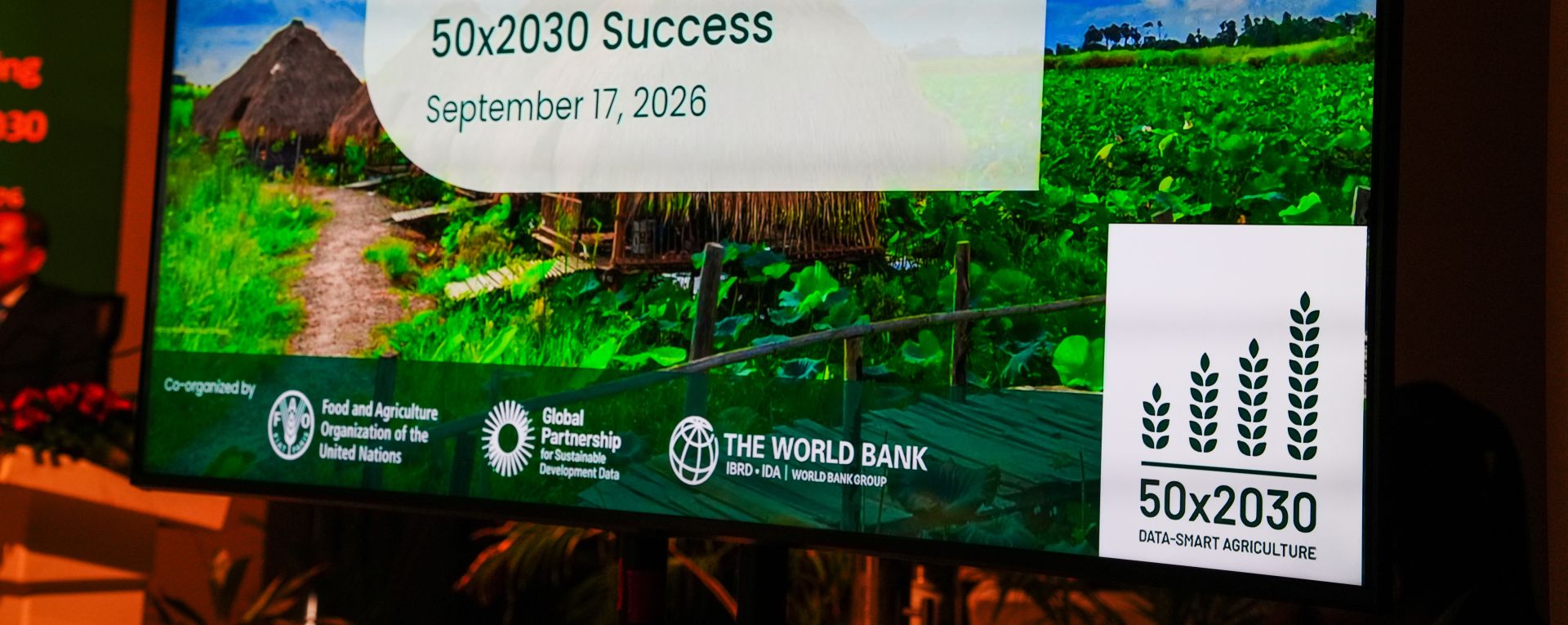
On Thursday, September 17, the National Institute of Statistics (NIS) and the Ministry of Agriculture, Farming and Fisheries (MAFF) hosted an event in Phnom Penh, co-organized by the 50x2030 Initiative, the Food and Agriculture Organization of the United Nations (FAO), the Global Partnership for Sustainable Development Data (GPSDD) and the World Bank, to celebrate Cambodia's graduation from the 50x2030 Initiative, and their remarkable progress in closing the agricultural data gap.
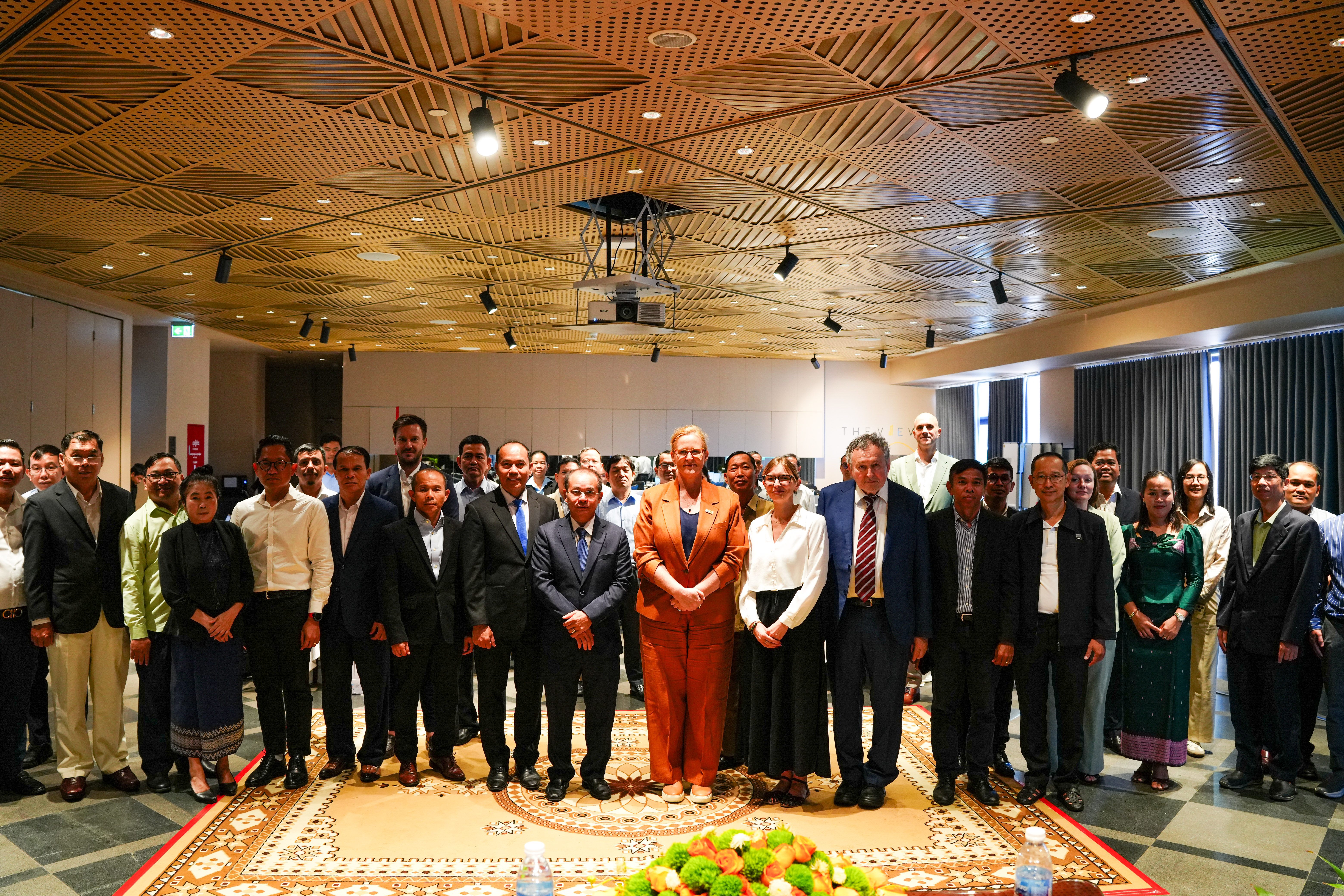
Photo credits: FAO
During the opening of the graduation ceremony, H.E. Nor Vanndy, Director of NIS, reflected on Cambodia's experience with the Initiative. He emphasized that the investment to building local capacity, data skills, and technical expertise through the Initiative was what had made the transformation of Cambodia's agricultural survey possible. Strong political cooperation and a close partnership with MAFF were also key and will remain important beyond 50x2030.
Mr Chae Savon, Deputy Director General of MAFF, echoed the sentiment of H.E. Vanndy and the value of the shared ownership that NIS and MAFF have of the CAS, adding that the data is widely used in MAFF for planning, implementing and monitoring agricultural programs across the country.
Ms Rebekah Bell, the Cambodia Representative of FAO, who has been a close partner of NIS and MAFF throughout the Initiative, supporting capacity building and implementation, highlighted Cambodia's progress as an important achievement and an example for others.
The goal of 50x2030 was never just to collect data.It was to build a national system that could produce good data on its own... Agricultural data is no longer treated as a donor requirement in Cambodia. It is treated as a national asset. This is the gold standard of development success."
Speaking virtually from Rome, Mr Vasco Molini, Program Manager of the 50x2030 Initiative, reflected on Cambodia's six-year journey and its progress in moving "from data to impact". He highlighted the growing use of CAS data across government and beyond, noting that better agricultural statistics can provide the evidence needed to inform policies, support research and strenghten decision-making. Looking ahead, he emphasized the importance of continuing to promote the use of agricultural data as Cambodia builds on the foundations established through 50x2030.
Meanwhile, Ms Ruby Richardson, speaking on behalf of GPSDD, highlighted research showing that investment in data system delivers an average return of $32 for every $1 invested. She noted that Cambodia's continued investment in data and data use will help that return pay off, supporting the country's development and strenghtening data-driven decision-making in the years ahead.
Benefits beyond agriculture
The benefits of the partnership have extended beyond agricultural statistics. Strengthening Cambodia's national statistical system, including through the introduction of CAPI, has contributed to the digitization of other key national surveys, including the Socio-Economic Survey, the Demographic and Health Survey and the Gender and Environment Survey.
As Cambodia's data has become more reliable, timely and useful, trust in it has grown. In recent years, the Prime Minister has repeatedly called for more resources for national statistics and encouraged all ministries to use national data in their decision-making.
CAS data is also used by civil society and international organizations for policy and development purposes. Kimchoeun Park, Policy Advisor with CAPRED (Cambodia-Australia Partnership for Resilient Economic Development), shared how CAS data has supported work on the Pentagonal Strategy, Cambodia's national socioeconomic roadmap toward Cambodia Vision 2050, by helping filling data gaps, establish baselines, and support ongoing monitoring and evaluation.
Similarly, Seoun Ung, representing Action for Research and Development (ARD), said the organization regularly uses openly accessible CAS data for policy analysis and recommendations to government and development partners.
Speakers from FAO and the International Fund for Agricultural Development (IFAD) shared that CAS data has informed recent investment case studies designed to attract public and private sector investment in Cambodia.
A data-focused future
While the 50x2030 Initiative comes to a close, the momentum of the data work is not slowing down. - H.E. Nor Vanndy
Cambodia's graduation marks the beginning of a new phase. The country has established a regular agricultural survey program and the national capacity to sustain it, building on the experience gained through 50x2030 to keep agricultural statistics relevant, accessible, and useful.
Every country in the 50x2030 Initiative has its own priorities and challenges, but Cambodia has shown what is possible. Strong and sustained political will, coordination across-government, and active engagement in the partnership helped Cambodia to reach this milestone. These same ingredients will be what carry the work beyond the 50x2030 finish line.